Galápagos Redefined Expeditions

Conocimientos

Galápagos wildlife, species by species

A naturalist's field notes on the wildlife of San Cristóbal and the wider Galápagos archipelago, drawn from decades of direct observation and scientific study.

How the Islands Were Born

A living volcanic laboratory

Before there was wildlife to observe, there was geology to shape it. Here's how a hot spot, a moving tectonic plate and millions of years of eruption and erosion built the stage for everything you'll see at Kicker Rock.

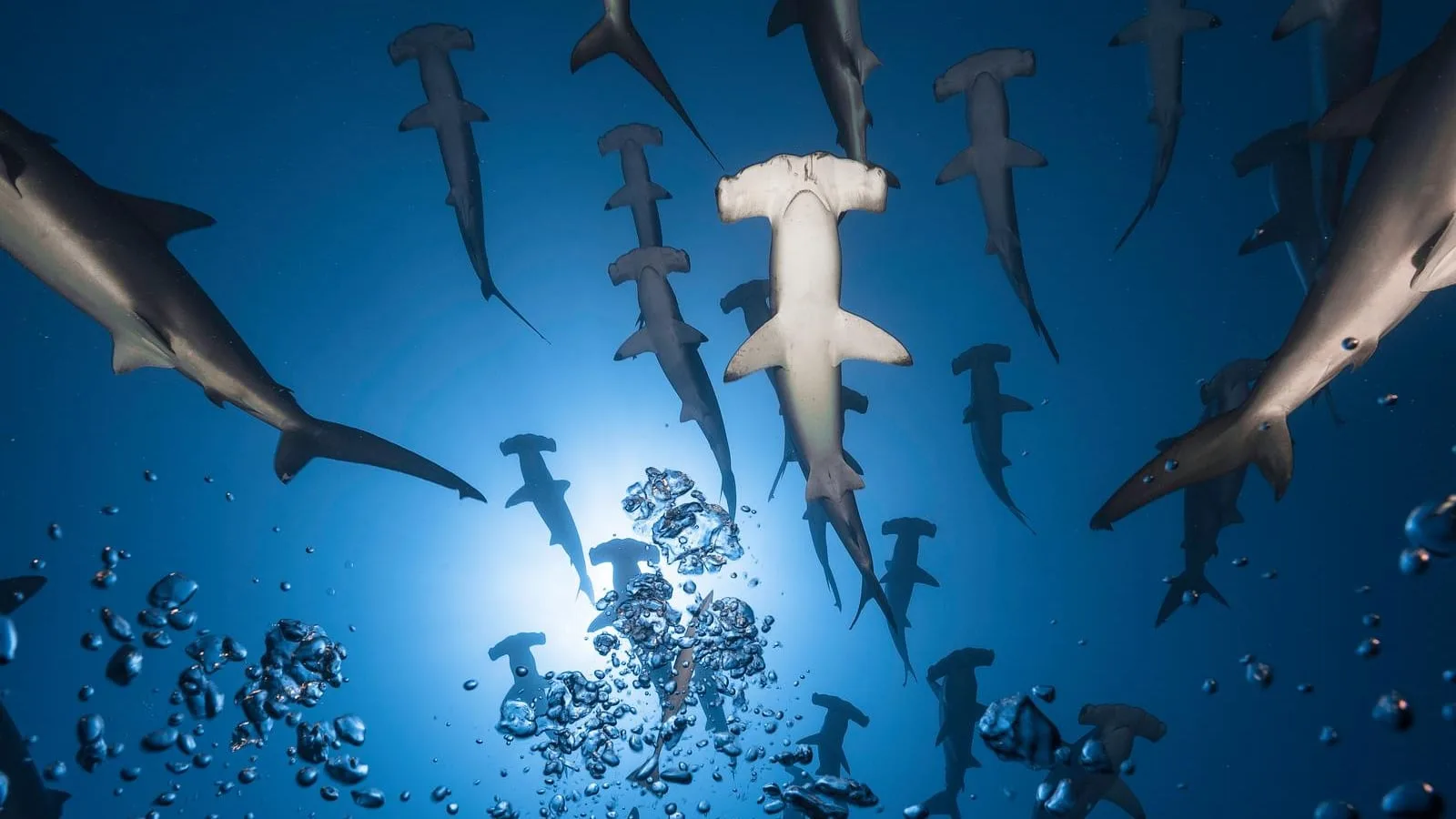
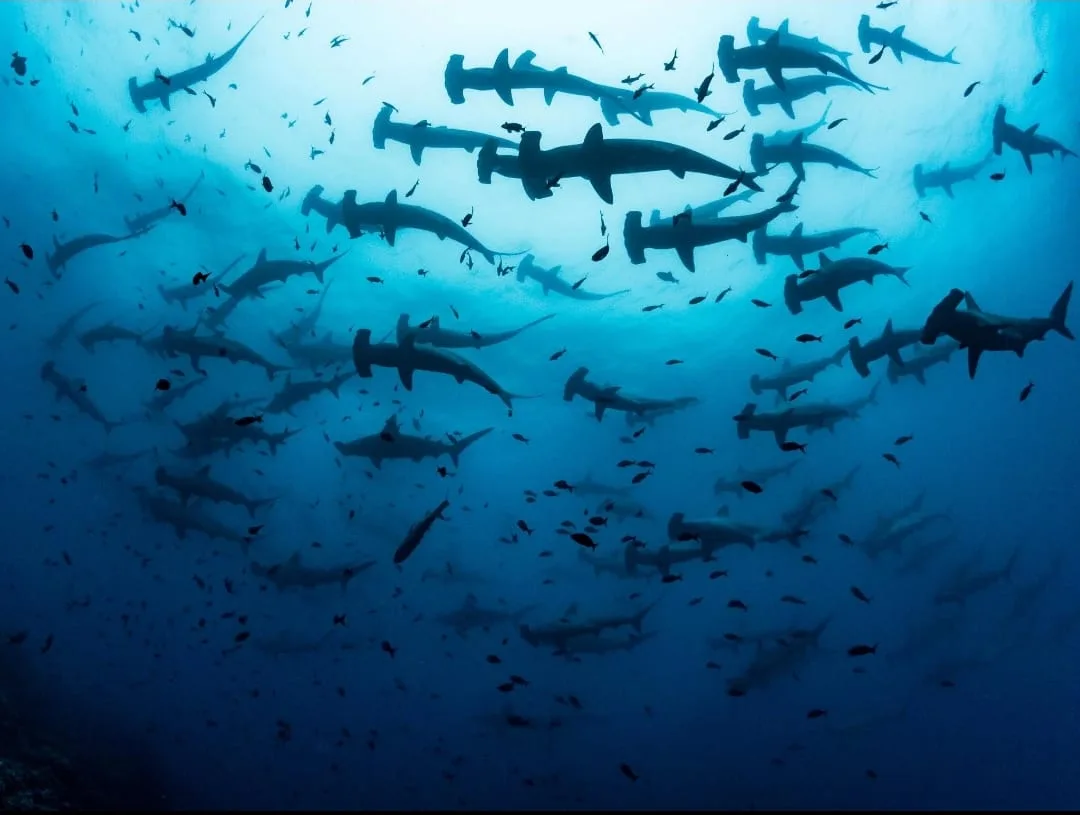
School of scalloped hammerhead sharks seen from below against the sunlight, Kicker Rock, Galápagos

01

A hot spot beneath a moving plate

The Galápagos exist because of a mantle plume, a stationary column of heat rising from deep within the Earth, much like the one beneath Hawaiʻi. The hot spot itself never moves; what moves is the Nazca Plate drifting slowly above it, at roughly seven centimetres a year.

As the plate creeps eastward, new volcanoes are born above the hot spot on the archipelago's western edge, while older islands are gradually carried away, cooling, eroding and sinking behind them. Isabela and Fernandina, still directly above the plume, are the youngest and most volcanically active islands in the archipelago; San Cristóbal, at the eastern end, is among the oldest.

02

Building an island from the ocean floor

Every Galápagos island begins as an underwater volcano, sometimes starting more than 3,000 metres below the surface. Layer upon layer of fluid basaltic lava builds a broad, gently sloped shield volcano, the same style of eruption that built Hawaiʻi's volcanoes.

Once the volcano breaches the surface, lava flows spread outward and a summit caldera often forms: not simply a hole, but the visible signature of an emptied magma chamber whose roof has collapsed, connected to a whole network of underground fractures and lava tubes feeding back to the hot spot below.

03

Kicker Rock: what erosion leaves behind

Kicker Rock, León Dormido, is a striking example of geology shaping biology. What you see today is the eroded remnant of an ancient volcanic cone, its softer material long since worn away by wind and waves, leaving two vertical walls of hardened volcanic tuff standing in the open Pacific.

The narrow channel between them is no accident: converging currents funnel through it, concentrating oxygen and nutrients. Marine channels like this one function as natural highways, which is exactly why hammerhead sharks, rays and countless reef fish gather here in numbers rarely seen elsewhere in the archipelago.

04

San Cristóbal's one-of-a-kind lagoon

In San Cristóbal's highlands sits El Junco, the only permanent freshwater lagoon in the entire Galápagos archipelago, filling an ancient volcanic crater roughly 600 metres above sea level. Its existence is something of a geological rarity in a group of islands with no permanent rivers.

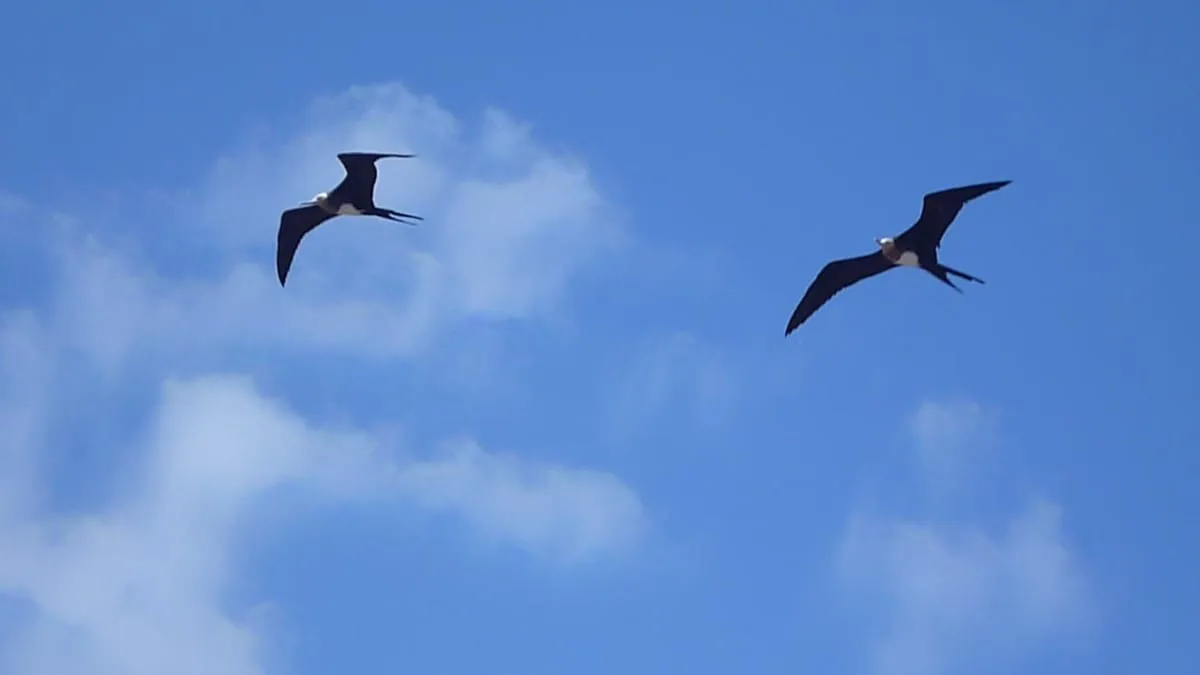
Frigatebirds are regularly seen flying inland to bathe in its fresh water, rinsing the salt that builds up on their feathers, a small daily reminder of how tightly geology and wildlife behaviour are woven together here.

School of scalloped hammerhead sharks diving at Kicker Rock, Galápagos

Scalloped Hammerhead Shark

Sphyrna lewini

Kicker Rock's narrow channel is one of the most consistent places in the Galápagos to see scalloped hammerhead sharks schooling in open water, sometimes in groups of dozens, drawn by the nutrient-rich currents that converge around San Cristóbal.

Channels like this one act as natural highways for sharks: converging currents concentrate oxygen-rich, nutrient-dense water, and hammerheads, which must keep swimming to breathe, take full advantage of the flow.

Their distinctive cephalofoil (hammer-shaped head) spreads their electroreceptors wide, letting them detect the faint electrical signals of prey buried in sand, an adaptation shaped by millions of years of evolution.

Scalloped hammerheads are classified as Critically Endangered by the IUCN, making sightings here both a privilege and a reminder of why Galápagos National Park's marine regulations matter.

Did you know?

In a school, the larger females typically swim at the front, pushing against the current, while smaller males follow, a display of stamina that plays into mating selection.
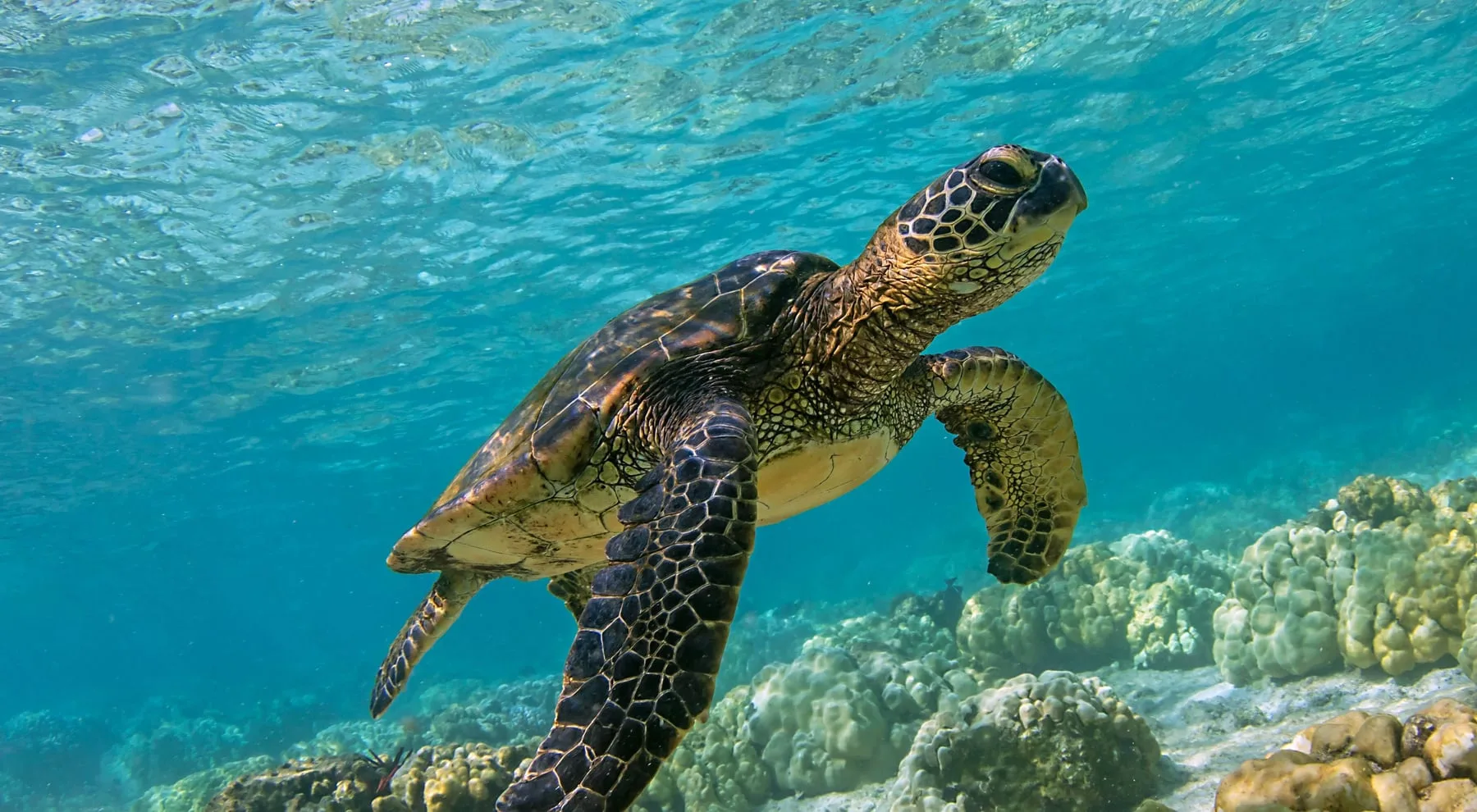
Green sea turtle rising toward the surface over a coral reef, Galápagos

Green Sea Turtle

Chelonia mydas

Green sea turtles are frequent visitors to the waters around Kicker Rock, often seen grazing on algae along the rock's underwater walls or gliding through the channel between dives.

Named not for their shell but for the greenish fat beneath it, a byproduct of their largely herbivorous, algae-based diet as adults, these turtles can live well beyond 60 years.

Galápagos green turtles nest on nearby beaches; observing them without disturbing their behaviour is a core part of the Park's conservation protocols we follow on every outing.

Did you know?

In some western islands, a diet rich in carotenoid pigments gives certain individuals a rare orange-tinted shell, around San Cristóbal, most turtles keep the classic dark, olive tone.

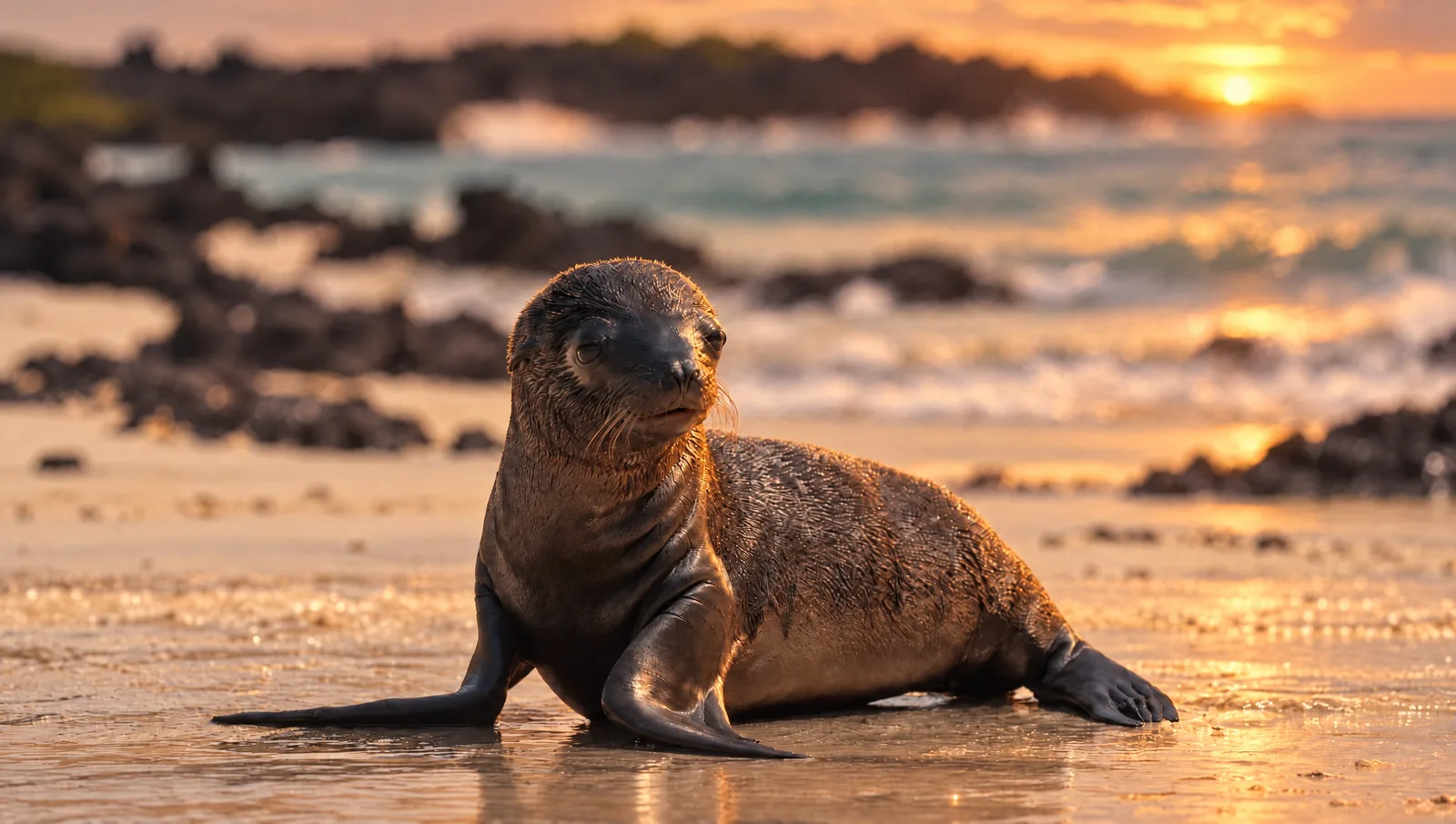
Baby Galápagos sea lion pup portrait, San Cristóbal

Galápagos Sea Lion

Zalophus wollebaeki

Endemic to the archipelago, Galápagos sea lions are among the most playful animals you'll meet in the water, young individuals in particular often approach snorkelers out of curiosity, twisting and darting around divers.

San Cristóbal hosts some of the largest sea lion colonies in the islands, and encounters near Kicker Rock are common outside of breeding areas, where a respectful distance is always maintained.

A single dominant bull defends the best stretch of beach and its females almost entirely by sound, a constant, deliberate bark that asserts territory before any physical confrontation is needed.

Sea lions are a useful indicator species for marine biologists: shifts in their population and behaviour reflect broader changes in fish stocks and ocean temperature across the archipelago.

Did you know?

Near San Cristóbal's Punta Pitt, young males gather in bachelor groups to spar for years before they're old enough to challenge for a territory, a training ground for future dominance.

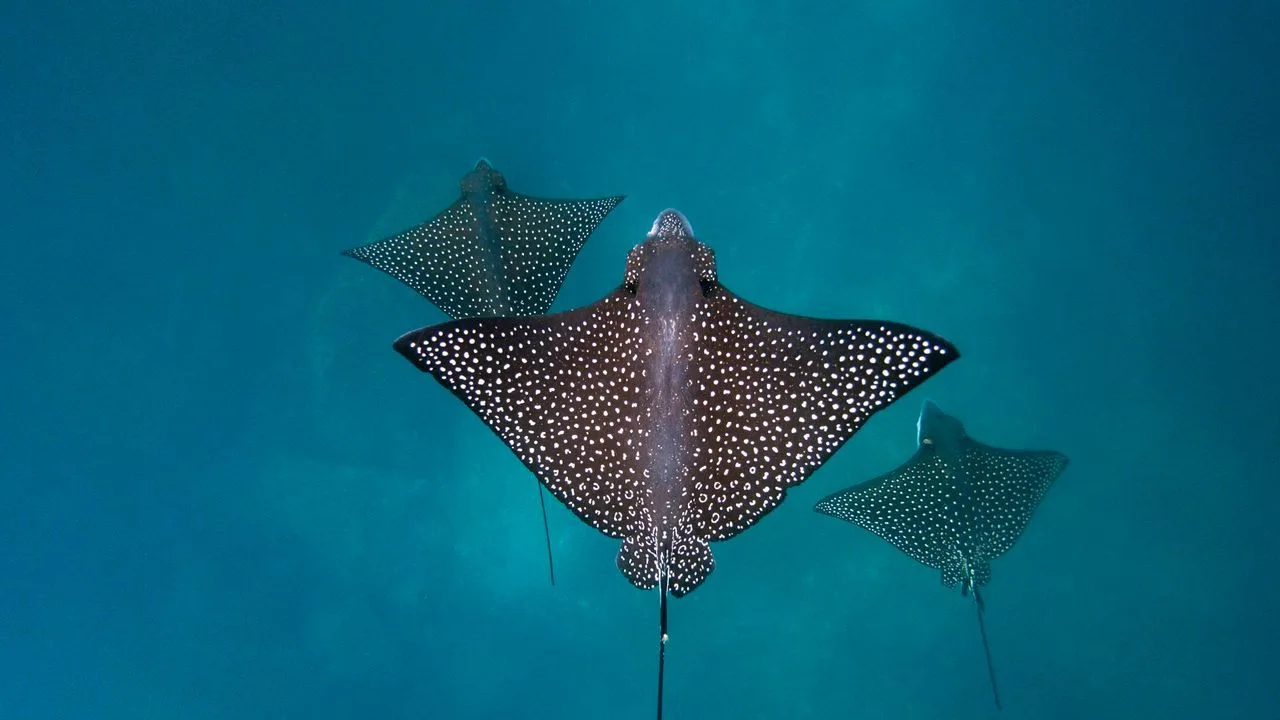
Large school of spotted eagle rays gliding together in open water, Galápagos

Spotted Eagle Ray

Aetobatus narinari

With a wingspan that can exceed two metres, spotted eagle rays are among the most graceful animals passing through the Kicker Rock channel, often seen gliding just above the sandy bottom or cruising in open water.

Their white-spotted dark backs and elongated snout, used to dig for molluscs and crustaceans buried in the sediment, make them instantly recognisable, even from a distance.

Eagle rays are ovoviviparous, giving live birth to a small number of well-developed pups, a reproductive strategy that makes their populations especially sensitive to overfishing.

Did you know?

No two eagle rays share the same spot pattern, the constellation of white markings on their back is as individual as a fingerprint.

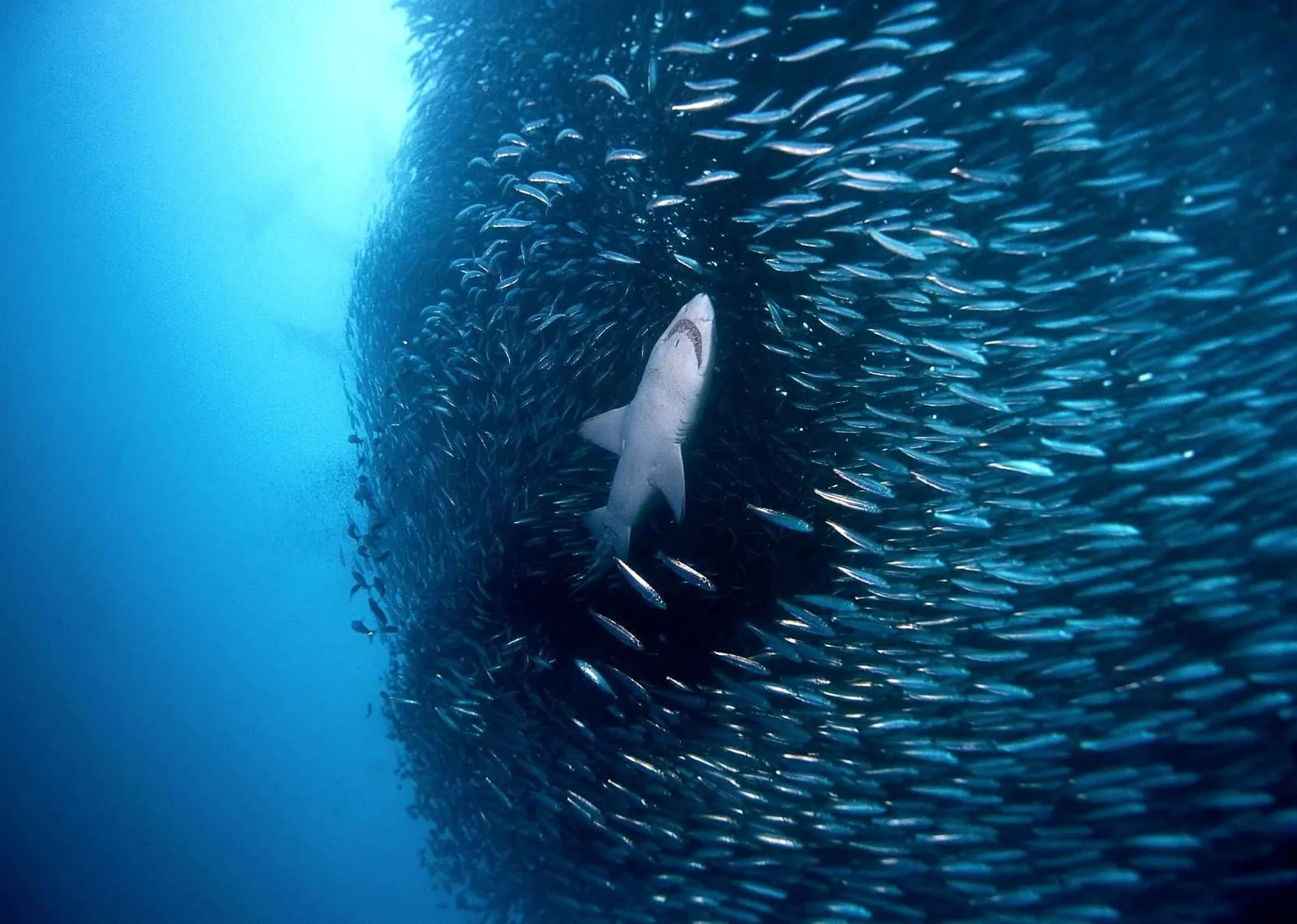
Massive swirling sardine bait ball with a shark cutting through it, Galápagos

Sardine Bait Ball

Sardinops sagax

The cold, nutrient-rich currents that converge on San Cristóbal support enormous schools of sardines, sometimes tens of thousands of fish moving as a single, shimmering mass through the Kicker Rock channel.

When a predator approaches, the school collapses into a tight, spinning 'bait ball': a defensive formation that makes it far harder for any one fish to be singled out and caught.

These bait balls are a magnet for the channel's larger hunters, hammerhead sharks, sea lions and reef sharks all take advantage of the concentrated prey, turning a sardine school into one of the most electric encounters in the water.

Did you know?

Each sardine reacts to its neighbour's turn in a fraction of a second through its lateral line, an underwater sense organ, letting thousands of fish move as if sharing a single mind.

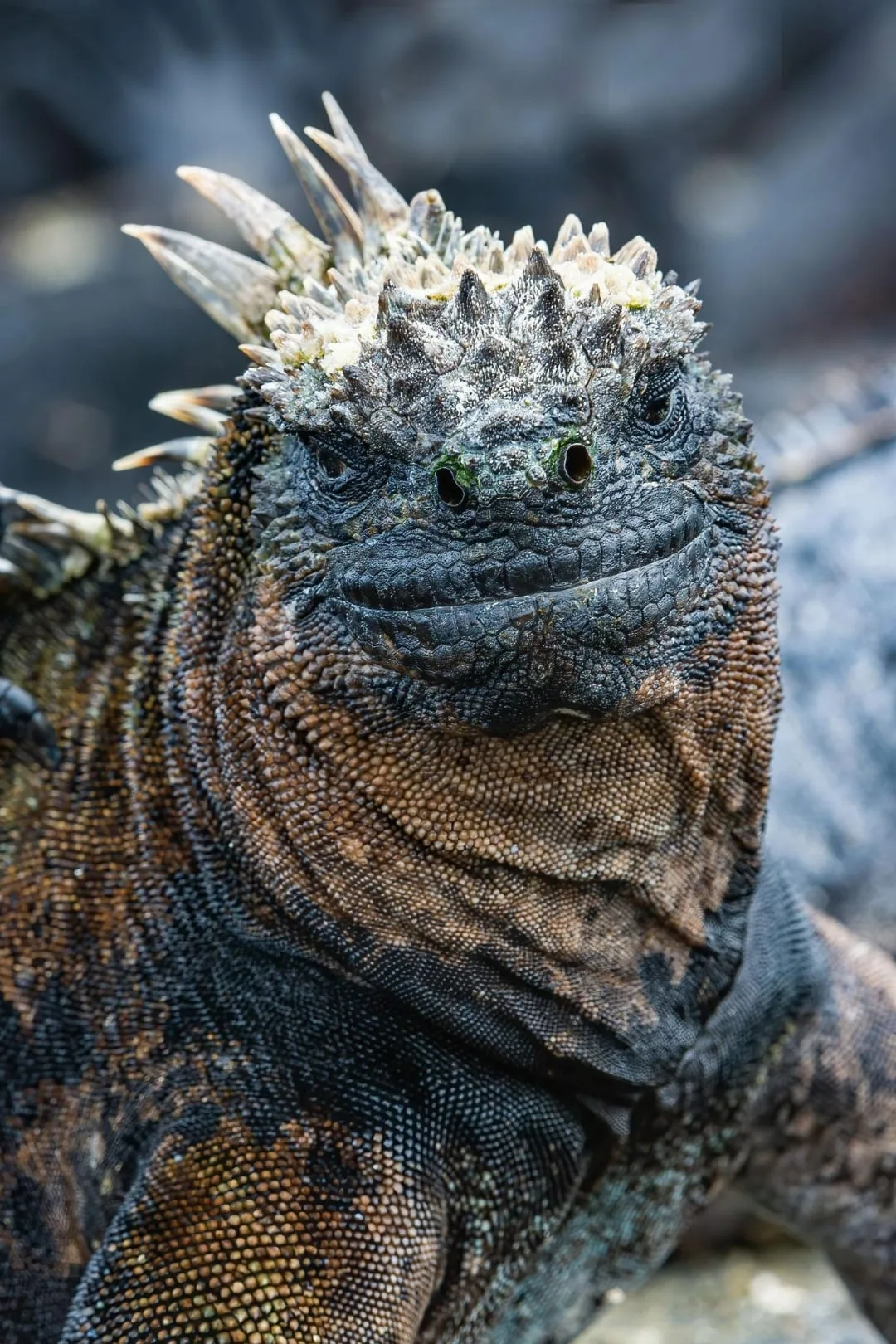
Close-up of a marine iguana's crested head, Galápagos

Marine Iguana

Amblyrhynchus cristatus

The marine iguana is the only lizard on Earth that feeds in the ocean. Endemic to the Galápagos, it dives into cold water to graze on algae, then hauls back onto black lava rock to warm up again in the equatorial sun.

A flattened, laterally compressed tail drives it through the water in a slow, powerful S-motion, while sharp claws grip the rock against breaking waves.

During severe El Niño years, when algae becomes scarce, marine iguanas can measurably shrink, reabsorbing bone tissue to reduce their body length and energy needs, then regrowing it once food returns.

Did you know?

It's one of the only vertebrates known to reversibly shrink its own skeleton to survive famine, a survival trick biologists still study today.

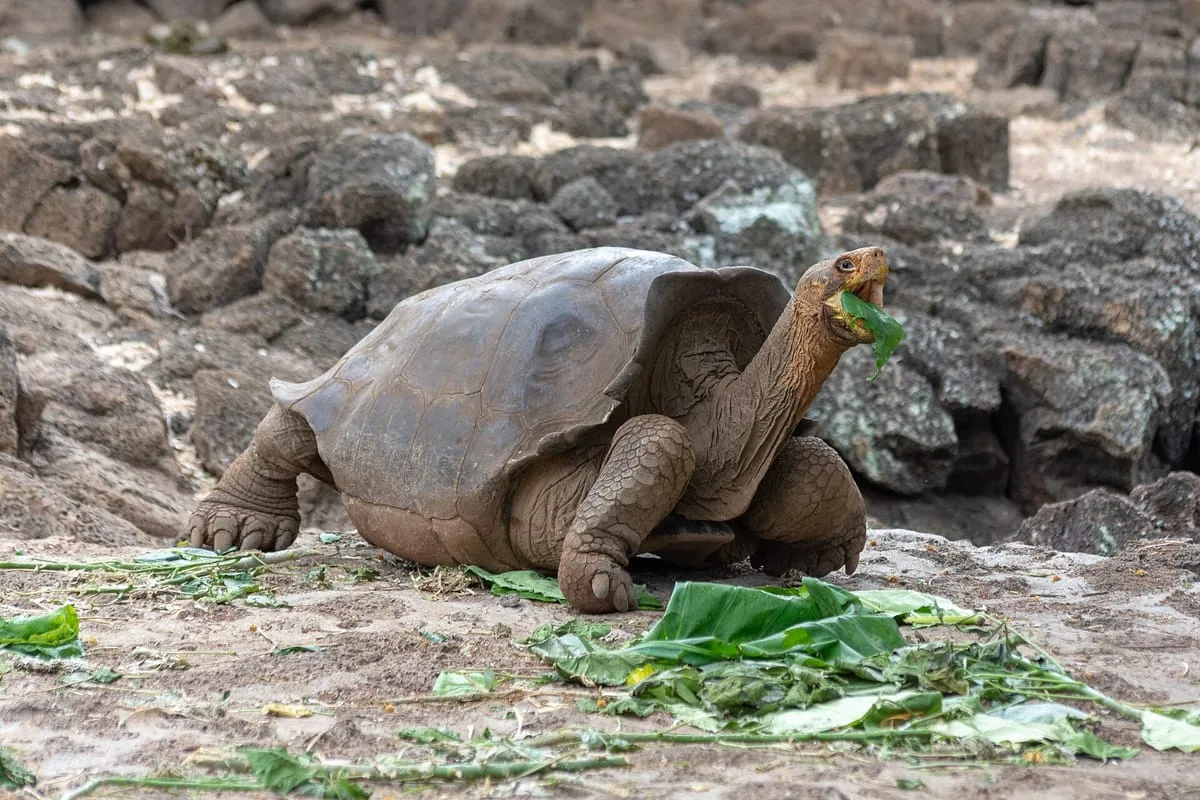
Galápagos giant tortoise feeding on vegetation

Galápagos Giant Tortoise

Chelonoidis niger

The giant tortoise is the animal that gave the Galápagos their name, from the old Spanish word galápago, describing the shape of its shell. It is also an ecosystem engineer: dispersing seeds, carving trails and turning soil as it moves.

Two shell shapes reflect two ways of life: dome-shaped shells belong to tortoises from humid highlands with abundant low vegetation, while saddleback shells, raised at the front, let tortoises from arid lowlands stretch their necks up to reach cactus pads.

Their slow metabolism and fat reserves, which can be converted into water internally, let them survive up to a year with little food or water, a key adaptation to an archipelago with no permanent rivers.

Did you know?

Giant tortoises are among the longest-lived vertebrates on the planet, with confirmed lifespans well past 100 years, some individuals are believed to have lived beyond 150.

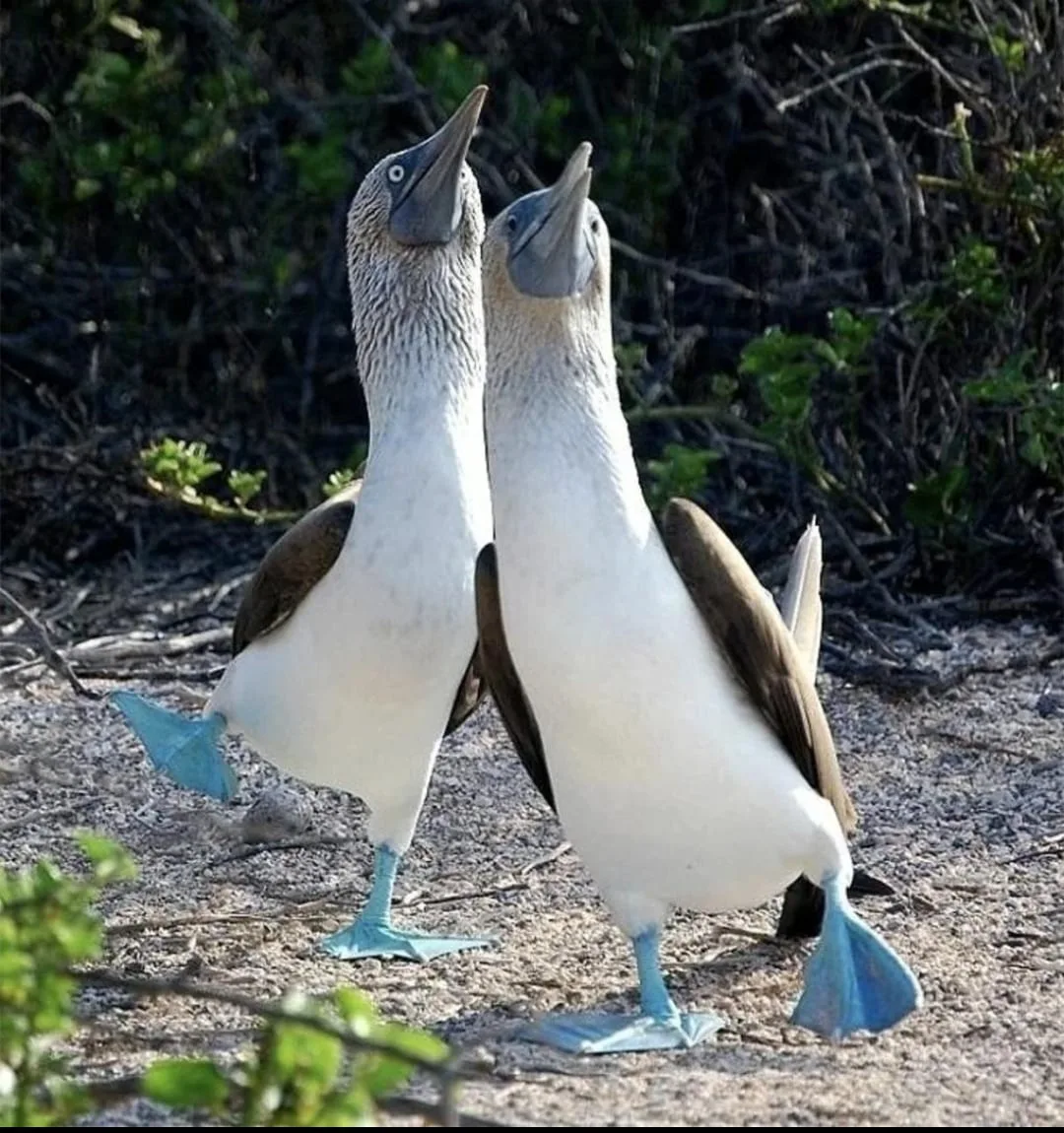
Two blue-footed boobies performing their sky-pointing courtship display, Galápagos

Blue-footed Booby

Sula nebouxii

The blue-footed booby's namesake feet aren't just decoration, their vivid blue comes from carotenoid pigments obtained through a fresh-fish diet, and the intensity of the colour signals a bird's current health to potential mates.

Courtship centres on the 'sky-pointing' display: the bird lifts its bill and tail skyward while showing off its feet in a slow, high-stepping walk, a performance repeated for an attentive partner.

Their nostrils are permanently sealed, an adaptation for plunge-diving into the ocean at speed; they breathe instead through the corners of their beak.

Did you know?

Because a booby's foot colour fades within weeks if its diet worsens, partners are effectively reading a live health report with every glance at each other's feet.

Male magnificent frigatebird displaying its inflated red throat pouch

Magnificent Frigatebird

Fregata magnificens

During courtship, males inflate a brilliant red throat pouch into a balloon nearly the size of their own body, drumming it with their bill to attract a passing female, one of the most striking displays in the archipelago.

Frigatebirds are aerial pirates: lacking the waterproof preen gland most seabirds rely on, they can't dive into the ocean without risking drowning, so they harass boobies and other seabirds mid-flight until they drop their catch.

With the largest wingspan-to-body-weight ratio of any bird, a frigatebird can soar on ocean thermals for weeks without ever landing.

Did you know?

Frigatebirds fly inland to San Cristóbal's El Junco Lagoon, the archipelago's only permanent freshwater lake, just to rinse the salt from their feathers.

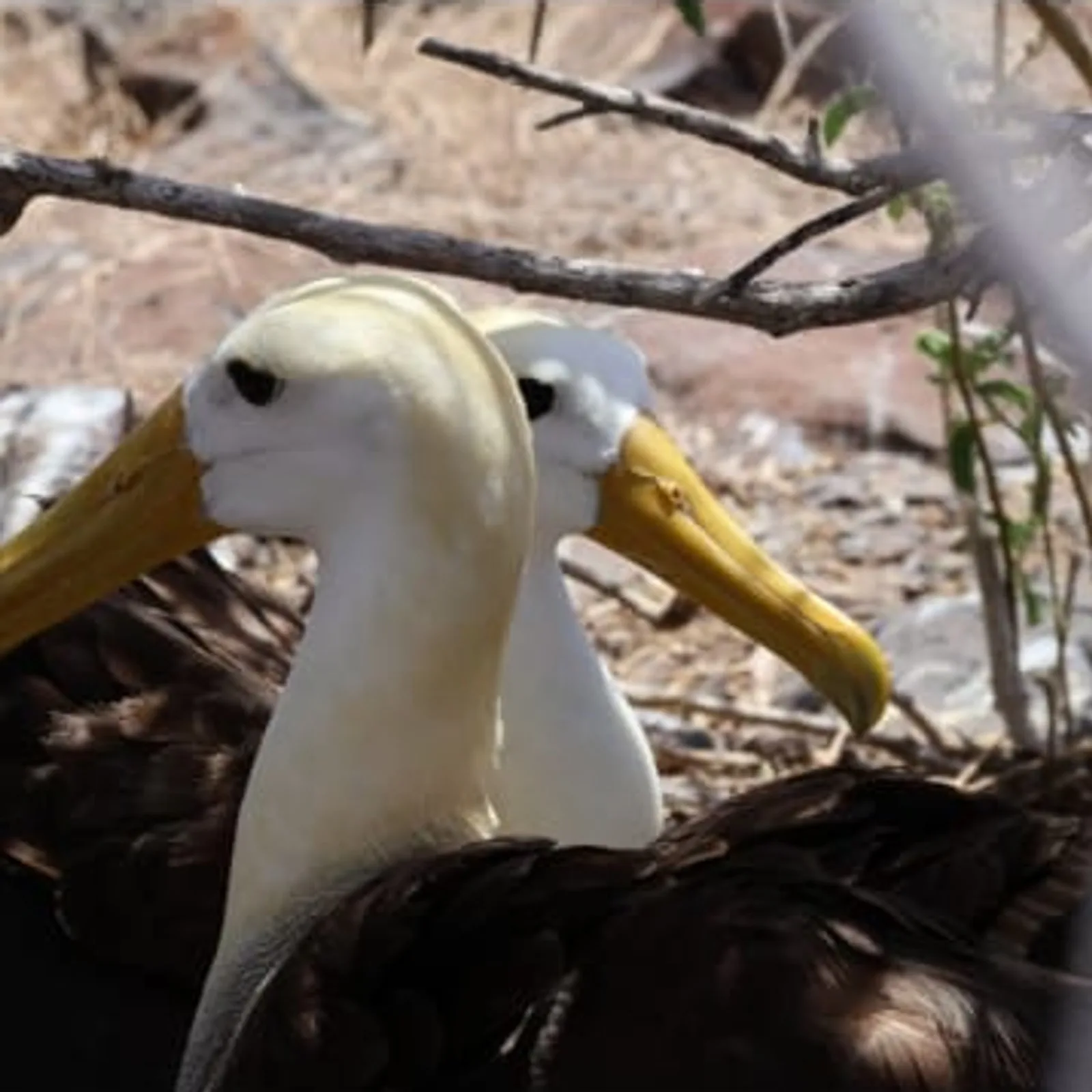
Pair of waved albatross performing their courtship 'fencing' display, Española, Galápagos

Waved Albatross

Phoebastria irrorata

The waved albatross is one of the rarest sights in the Galápagos: Española is its only nesting site on the entire planet, a colony found nowhere else on Earth.

Its courtship is one of the most elaborate in the bird world: paired albatross face off in a ritualized 'fencing' display, clacking their long yellow bills together, bowing and circling for minutes at a time, a bond that can last a lifetime.

With a wingspan approaching 2.3 metres, the largest of any bird in the Galápagos, the waved albatross is built for effortless, dynamic soaring, gliding for hours over open ocean on updrafts alone, barely beating its wings.

Did you know?

Waved albatross pairs reunite on the same patch of Española nearly every year, using their courtship dance to re-confirm the bond before laying a single egg.

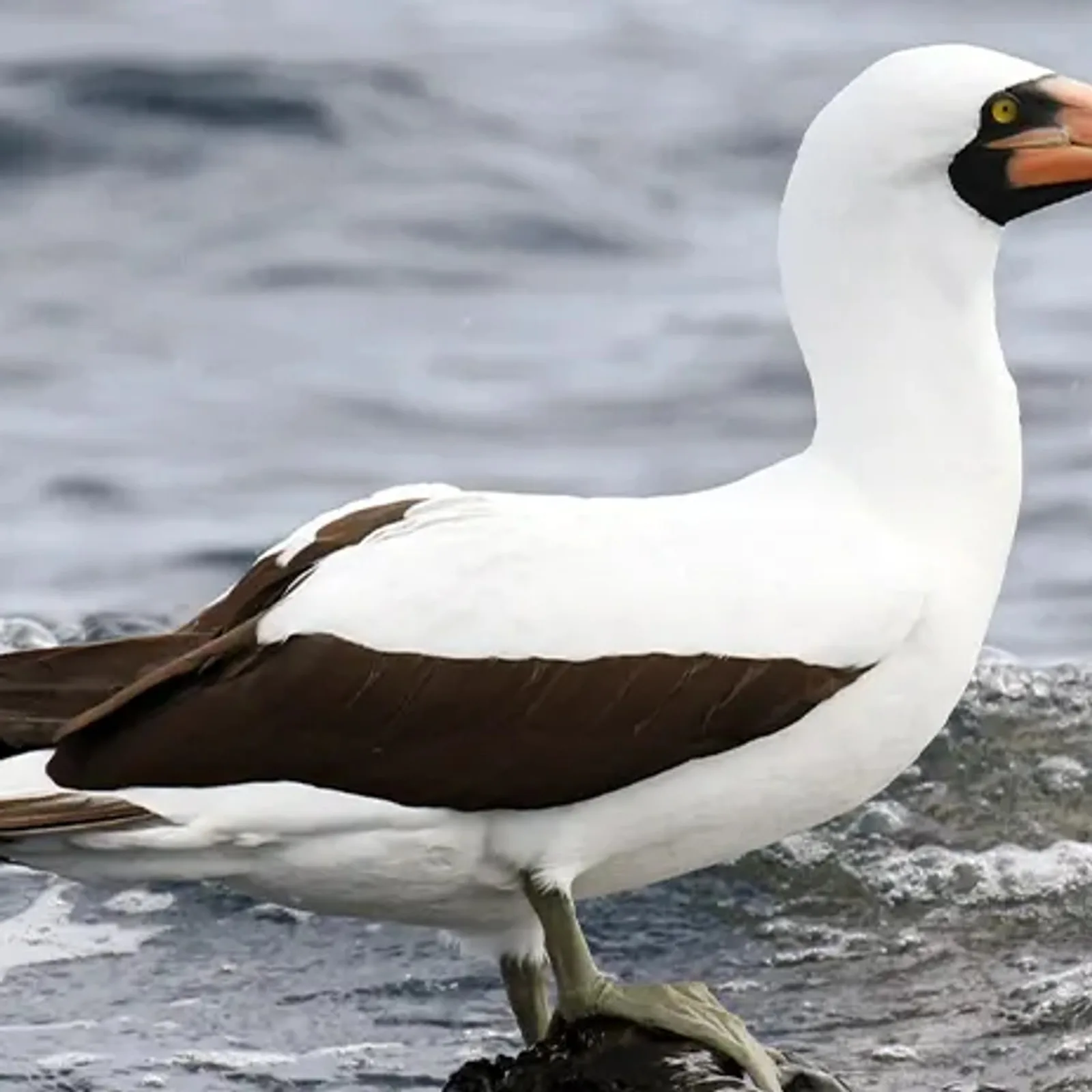
Nazca booby portrait showing its pale grey-blue bill, Galápagos

Nazca Booby

Sula granti

The Nazca booby is the largest of the Galápagos boobies, and one of the few seabirds that nests directly on exposed cliff edges, a strategy that keeps eggs and chicks safe from most land predators.

Almost every Nazca booby clutch consists of two eggs, but only one chick ever survives: the first-hatched sibling instinctively pushes the second out of the nest within days, a behaviour scientists call obligate siblicide.

Unlike its blue-footed relative, the Nazca booby's pale grey-blue bill and mask-like black facial skin make it instantly distinguishable at a distance, especially against the volcanic cliffs of Española and Punta Pitt.

Did you know?

The species was only recognized as genetically distinct from the masked booby (Sula dactylatra) in 2002, before that, this exact bird had been classified as just another population of its Atlantic and Pacific-wide cousin for over a century.

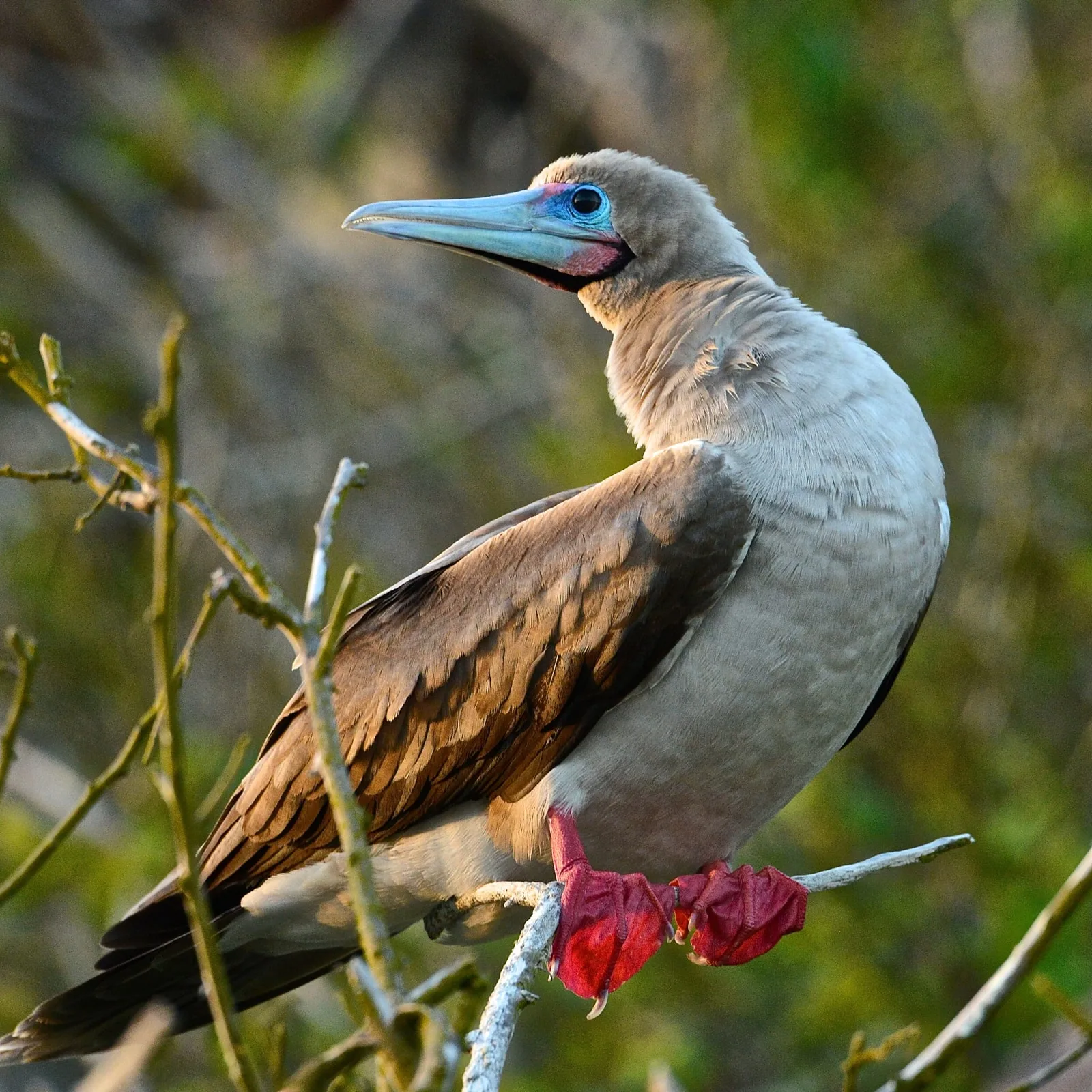
Red-footed booby perched on a branch, showing its bright red feet, Galápagos

Red-footed Booby

Sula sula

The red-footed booby is the smallest and the only tree-nesting member of the booby family in the Galápagos, building its nest in shrubs and low trees rather than on open ground or bare cliffs like its relatives.

Its brilliant red feet and pale blue-based bill result from pigments absorbed through its diet of flying fish and squid, caught in spectacular plunge-dives from heights other boobies rarely attempt.

This species also comes in two colour morphs, brown and white, both present in the same colonies, an unusually visible example of plumage polymorphism within a single population.

Did you know?

Red-footed boobies can fly over 150 kilometres from their nesting colony on a single foraging trip, further out to sea than any other Galápagos booby species.

Free Resource

Get the Naturalist's Ebook, Free

Download "A Galápagos Naturalist Point of View" by Samuel Quiroz, in the language of your choice, no booking required.

Ready to book your Galápagos experience directly?

Four naturalist-led excursions, availability limited by Galápagos National Park regulations — secure your place in advance.

Book Now